This question is asked constantly and answered badly, usually with brand assertion in one direction or forum anecdote in the other. A defensible answer...
This question is asked constantly and answered badly, usually with brand assertion in one direction or forum anecdote in the other. A defensible answer has to separate what can be verified from what cannot, and to be clear that a favourable view of a developer never removes the need for project-level diligence.
On the verifiable side the record is substantial. Embassy Group was founded in 1993 and has operated for over three decades, with current disclosure citing 160 million square feet across commercial, residential, flexible workspace and new development, 21 million square feet of completed homes, and a presence in 22 cities. Embassy Developments Limited is listed on both the BSE and the National Stock Exchange, subjecting it to disclosure obligations, and the group sponsors India's first and the Asia Pacific region's largest REIT by area.
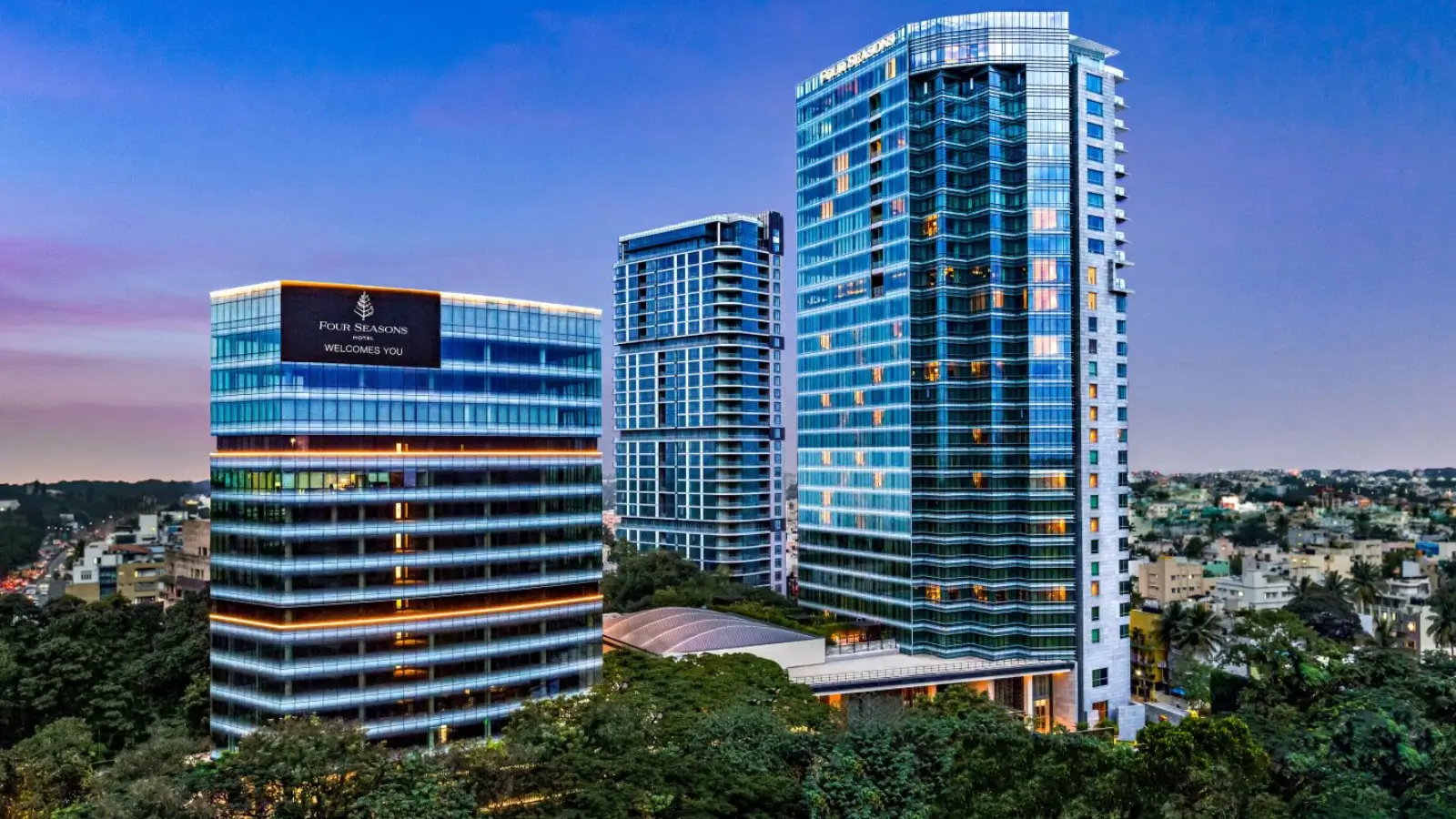
For this project specifically the delivery evidence is direct rather than inferential. Embassy ONE North Tower is complete, occupied and holds its occupancy certificate. The Four Seasons Hotel Bengaluru on the estate has operated since 2019 and Pinnacle at Embassy ONE is likewise operational and LEED Gold pre-certified. A buyer is assessing a delivered integrated development that can be walked through, which is a considerably stronger position than evaluating a launch on the strength of reputation.
The capability that matters most here is operational rather than constructional. Embassy's commercial estate is leased to institutional occupiers who impose continuous performance standards, and the group hosts a five-star hotel operator on this very estate. For a residence whose premium rests on a service platform performing for decades, that operating history is the most relevant evidence available, and it is a genuine differentiator from developers whose involvement ends at handover.
The honest limitations are three. First, no developer track record guarantees an individual project or residence outcome, and group performance does not transfer to your specific home. Second, figures quoted across Embassy documentation vary by publication date, with older documents citing 64 million square feet against the current 160 million, so any number should be date-checked before use. Third, credit ratings such as the IVR A- Stable assessment reported for the listed entity are opinions that get revised, and the current rating should be verified rather than a quoted one relied upon.
The defensible conclusion is that Embassy presents as a substantial, transparent developer with unusual operating depth, and that for a completed asset such as Embassy ONE North Tower the delivery question is largely settled by the building's existence. That still leaves the buyer's own work: verify the Karnataka RERA record, read the occupancy certificate, trace title and commission an encumbrance certificate through your own advocate, and read the residential management agreement and service charge schedule. A strong developer improves the odds; it does not replace the checks.
Related reading: Embassy ONE North Tower Review: An Honest Buyer's Assessment.
FAQs
Is Embassy Group a reliable developer in North Bangalore?
The verifiable record is substantial: founded 1993, over three decades of operation, current disclosure of 160 million square feet and 21 million square feet of completed homes, a BSE and NSE listing with its disclosure obligations, and sponsorship of India's first REIT.What is the strongest evidence for this specific project?
That it exists and functions. Embassy ONE North Tower is complete and occupied with occupancy certificate received, the Four Seasons Hotel on the estate has operated since 2019, and the Pinnacle office building is operational and LEED Gold pre-certified.Does a strong developer record remove the need for diligence?
No. Group performance does not transfer to an individual residence. Verify the Karnataka RERA record, read the occupancy certificate, trace title and commission an encumbrance certificate through your own advocate, and read the management agreement and service charge schedule.
Related Articles

Festive Season Home Buying in North Bangalore: Does the Timing Help?
Property enquiries in India rise sharply between September and November, and the industry has built a marketing season around it. Whether the timing...

Stamp Duty and Registration in Karnataka: A Complete Cost Guide
Transaction costs are the part of a property purchase buyers most often underestimate, and at ultra-luxury values the sums involved are substantial enough...
Bengaluru Metro Phase 3: The North Bangalore Property Impact
Metro expansion is the infrastructure story most likely to be oversold in Bengaluru property marketing, and the reason is that its effects are real but...

Karnataka RERA: How the Law Protects Luxury Homebuyers
The Real Estate (Regulation and Development) Act changed the balance of information between developer and buyer more than any other measure in Indian...