NH-44 and the Peripheral Ring Road: Infrastructure Shaping Bellary Road
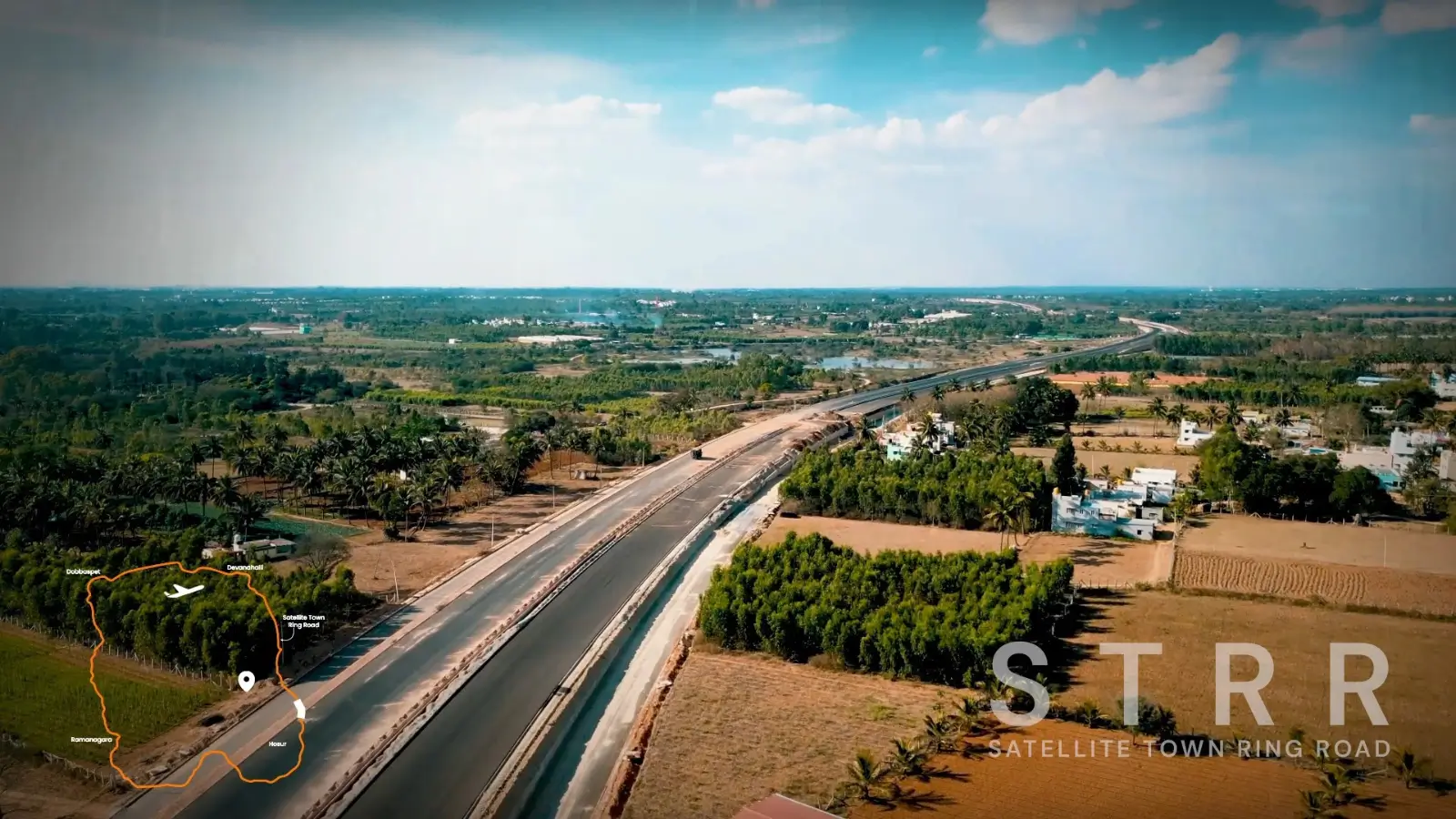
Road infrastructure determines property value on Bangalore's northern spine more directly than any other single factor, because the corridor's entire...
Road infrastructure determines property value on Bangalore's northern spine more directly than any other single factor, because the corridor's entire proposition rests on movement. Two pieces of infrastructure matter most for the Bellary Road stretch: NH-44 itself, and the long-discussed Peripheral Ring Road.
NH-44 is the existing asset and the reason this corridor works. It runs north from Mekhri Circle through Hebbal and onward past Yelahanka and Devanahalli to the airport, and the elevated section past Hebbal removed what was historically the corridor's worst bottleneck. The practical value is a single-arterial run to the airport of approximately 30 km and 40 to 50 minutes off-peak, without dependence on the Outer Ring Road. Single-arterial routes carry far less variance than multi-segment ones, and variance is what actually disrupts a schedule.
The Peripheral Ring Road is the prospective asset and should be assessed with more caution. Conceived to connect the northern, eastern and southern peripheries and reduce cross-city load on the existing Outer Ring Road, it has been under discussion and partial progress for years, with alignment, land acquisition and funding all subject to revision. Its eventual effect on North Bangalore would be genuine, materially improving movement between north and east, but no purchase decision should be underwritten on a specific delivery date.
For an address at the Mekhri Circle end, the differential impact matters. NH-44 benefits this stretch immediately and already. The Peripheral Ring Road, being peripheral, would benefit the outer segments around Yelahanka and Devanahalli considerably more than the inner segment, where the road network is already mature and the constraint is junction capacity rather than route availability. Buyers should be sceptical of marketing that attributes equal benefit to both.
The immediate constraint on this stretch is not connectivity but congestion at specific nodes. Mekhri Circle carries very heavy through-volume, and the segment between the circle and the start of the elevated stretch is the least predictable part of any northbound run. Improvements here would matter more to daily life at an address such as Embassy ONE North Tower than the Peripheral Ring Road ever will, because they affect every trip rather than only cross-city ones.
The reasonable framing for a buyer is that this location's connectivity case is already made rather than pending. It does not require future infrastructure to function, which is a meaningfully different risk profile from the outer corridor addresses whose value depends on delivery. Treat NH-44 as the asset you are buying and the Peripheral Ring Road and metro interchange as upside that may or may not arrive on schedule.
Related reading: Hebbal Metro Blue Line: What It Means for North Bangalore Homeowners.
FAQs
Why does NH-44 matter to Bellary Road property values?
It provides a single-arterial run to the airport of approximately 30 km and 40 to 50 minutes off-peak, without dependence on the Outer Ring Road. The elevated section past Hebbal removed the corridor's historic bottleneck, and single-arterial routes carry far less delay variance.How much will the Peripheral Ring Road benefit this stretch?
Less than the outer segments. Being peripheral, it would improve movement around Yelahanka and Devanahalli considerably more than the inner stretch near Mekhri Circle, where the road network is already mature and the constraint is junction capacity rather than route availability.What is the main infrastructure constraint on this corridor today?
Congestion at specific nodes rather than a lack of routes. Mekhri Circle carries very heavy through-volume, and the segment between the circle and the elevated stretch is the least predictable part of any northbound run.
Related Articles

Festive Season Home Buying in North Bangalore: Does the Timing Help?
Property enquiries in India rise sharply between September and November, and the industry has built a marketing season around it. Whether the timing...

Stamp Duty and Registration in Karnataka: A Complete Cost Guide
Transaction costs are the part of a property purchase buyers most often underestimate, and at ultra-luxury values the sums involved are substantial enough...
Bengaluru Metro Phase 3: The North Bangalore Property Impact
Metro expansion is the infrastructure story most likely to be oversold in Bengaluru property marketing, and the reason is that its effects are real but...

Karnataka RERA: How the Law Protects Luxury Homebuyers
The Real Estate (Regulation and Development) Act changed the balance of information between developer and buyer more than any other measure in Indian...